Continuation. Part one here.
But at this point we must find out whether Chelsea are the norm or the exception in the footballing climate in general. We will start small, looking at Chelsea's new 'competition', Tottenham Hotspur and Manchester City. In the Abramovich era, as Chelsea history circa 2003 onward has been called, Spurs have employed 7 managers and Man City 5 including the incumbents. Chelsea have had 10 in the same period. Looking at continental opposition during the Abramovich Era, the 10 most recent winners of the Champions League (going backwards from 2011 and not counting them more than once), have employed: 6 (Barcelona), 10 (Internazionale), 1 (Manchester United), 3 (AC Milan), 5 (Liverpool), 8 (FC Porto), 10 (Real Madrid), 7 (FC Bayern Munich), 5 (Borussia Dortmund), 9 (Juventus). Chelsea then are clearly NOT the anomaly. Chelsea are definitely not the first 'super sackers'. A look at the number of managers elite Italian and German clubs have had would put to rest all ideas of a Chelsea-centric sacking culture. Perhaps it is the financial clout, the obscene amounts of money Abramovich has put into and sometimes thrown out of the club (in terms of managerial compensation), combined with media scrutiny bordering on the ridiculous that has influenced several opinions. And this claim of scrutiny is neither paranoid nor Chelsea-centric, but rather, a problem (yes, a problem) in football as a whole.

Internazionale most notably have had the same number of managers as Chelsea in the 'Abramovich Years'
A dynamic example of the increasing intensity of the same would be the Wikipedia pages of 21st century footballers. One notices in their club career segments, a Miroslav Klose or a Wayne Rooney get increasingly detailed descriptions for effective non-achievements as opposed to the abstraction of only the most important facts in their earlier careers. Can we also then abstract the pressure to perform onto this same scrutiny? Perhaps, but a detailed study would be inconclusive at best. But that is beyond the purview of this current stream of thought. Returning to the issue at hand, if the culture is one of quick managerial changes, we must then first ask why it is so before we ask why Chelsea are the pantomime villains, the Guy Fawkes to burn whenever there is a managerial casualty somewhere in the big leagues of Europe.
Football in general has become more and more dependent on its financial side, and with Financial Fair Play, which primarily posits that a club cannot spend more money (on transfers and the like) than it earns (and hence ideally negating the possibility of a 'sugar-daddy' owner investing heavily to create another footballing superpower), on the European horizon it will be even more so. Then for the daily-management aspect, the manager-owner relationship becomes strictly one of employer-employee and now more than ever has this aspect of the football club mirrored the face of businesses worldwide. Where is the problem then? It would be with the consumers, or in this case, the fans. The essential problem with football ever having a complete and democratically discernible business aspect to it (from a lay-fan's point of view) would be in the fans themselves. The product they see week-in, week-out is one they believe (correctly, to an extent) is produced under the stewardship of the suited man they see week-in, week-out. Perhaps the simplest analogy to bring in here would be that of a recognizable company. Say we take Apple. If they relieved chief industrial designer Sir Jonathan Ive of his duties to replace him with, say, (wishful thinking here) Dieter Rams, there would be a discernible change in product aesthetics that would have some wondering and several complaining with the ain't-broke-don't-fix argument.
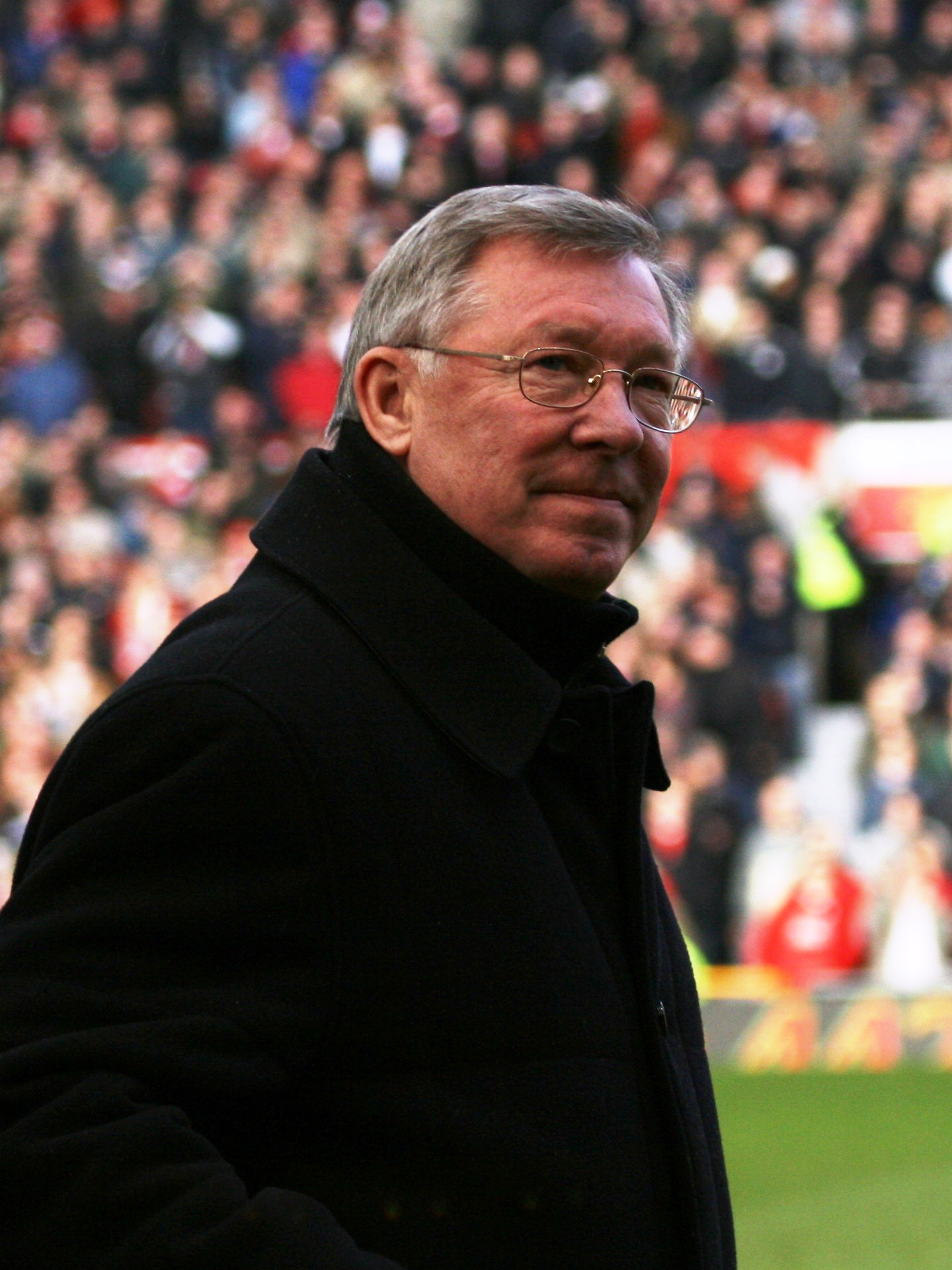
A crucial advantage Sir Alex Ferguson has over most current managers is that few (fans and media alike) can judge him in terms of his predecessor. Heard the lines, "Oh, Ron Atkinson would have done a better job!" lately?
However, the crucial deviation here is that it would not be a change with limitless public exposure as is the case for a manager of a football club. Every week, he is a living reminder of the owner's making the choice over his predecessor. For a team like Chelsea, with repeated managerial changes, it would be similar to every generation of iPod having different aesthetic roots as opposed to a unified, understandable, familiar sentiment and aesthetic it has found under Ive. The problem then is not (completely) one of the personnel as much as that of Identity. The ability to have a unique (if gradually developing) signature to anchor in the security of a system that still works. And this is a crucial point, to be addressed later especially in context of the English game. What we should question now is the necessity of identity (and perhaps, crucially, the new aesthetic of dissimilarity) for what is essentially a product. Let is break up the word itself to ask whether an 'entity' (which I posit here to be non-living) requires a unique 'id' for its successful and competitive functionality in its sphere of action. The obvious answer here is that it doesn't. The need to go against pain and unpleasure (seeing as I did bring in Freud, might as well extend the analogy) is, in fact, the footballing unconscious and it is at the heart of every player and manager.
In answer to why Chelsea have become representative of this quick-hire-quick-fire culture, it would essentially be a price of their instant success with the coming of the Abramovich era. Becoming too famous for their own good, one might say. But the fact here remains that Chelsea are just one in a pantheon of impatient clubs who will see perceptible success at the cost of replacing the man hired to engineer the same. This is not something new to football or business. But this is a side gaining more and more indecent exposure at the cost of Chelsea's image in particular. Why not other clubs so much? The reason is simple.
To be continued..
(note that all managerial statistics include caretaker managers)
Image credit:
UEFA.com: http://www.uefa.com/MultimediaFiles/Photo/competitions/Comp_Matches/01/49/15/73/1491573_w2.jpg
Austin Osuide: http://upload.wikimedia.org/wikipedia/commons/1/14/Alex_Ferguson.jpg

I do think it is mostly Abramovich's fault for sacking managers at the slightest slack in performance. Even that would be justified had he not lorded over every team decision and thrust the likes of Torres into the field without any sort of consultation with the coach. The reason why Chelsea receives so much flack is probably because, unlike the other clubs, Chelsea's financial mettle and the mistakes we can afford for it are on display every time Oscar flounders with a pass or a manager who was successful last season is fired mid-season. City have made fewer mistakes with much more money.
ReplyDeleteAnother thing that your writing draws light to is the fact that all old rivalries (based mostly on location, like Chelsea and Tottenham) are gradually dying out for a new, much dirtier and more serious rivalries with legal consequences. This is something for which the media is ostensibly to be blamed. The 'Can we buy a ground for you' rivalry was before our times, but seemed preferable to 'Suarez was racist, so I'm not going to shake his hand to honour the pre-match ritual even though we've supposedly made peace'.
Oh, this is Soumashree.
ReplyDelete